Showing posts with label Learning Fun. Show all posts

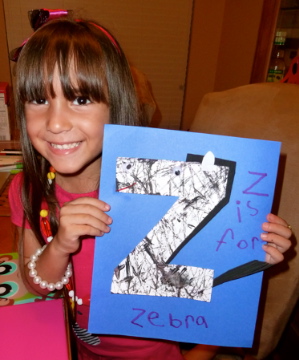
ABC Fun Z is for Zebra: Marble Painting w/the Letter Z

We have had lots of fun with our Zoo Theme this past week. 
We read many fabulous stories, enjoyed lots of great crafts & activities that we will be sharing with you and even took a trip to the zoo! so much FUN!

Today we are sharing our ABC Letter Z craft with you.
This is going to be part of the ABC Book that I am creating with my 4yr. old.

It turned out so cute that even my soon-to-be Kindergartener wanted in on the fun.


Z is for Zebra

Isn't our Zebra Z cute?

Ready to make your own?

Here's What You Need:
white cardstock
blue construction paper
black foam
wiggly eye
black & red permanent marker
glue

Here's What We Did:

1. Using the white card stock I made a large Z template


2. I taped it onto a large tray and added a few drops of black paint and marbles (the Lil Diva used 4 to match her age!)


3. Then the Lil Diva had fun rolling the marbles to create stripes on the Z. After they were satisfied with their stripes we let the Z's dry.


Here's what they looked like after rolling. 


 To Turn the Z into a Zebra:
sorry about the lack of photos for this part - dead camera battery :(

4. I cut a mane out of black foam. The Lil Diva glued it under the Z and then cut strips to make it look like hair.

5. I cut out a tail & she cut it into strips to look like hair as well and we attached it to the lower part of the Z.

6. Add wiggly eye and draw smile & nostril (make side profile of face)

7. I had the Lil Diva copy Z is for Zebra onto the paper.


Didn't she do a great job? :)


We also practiced making the letter Z using our foam puzzles


and writing in a plastic baggie filled with black paint -
the Lil Divas LOVED writing this way.


Books:


Bern

Mom Talk - Getting Your Child Ready For Kindergarten


It's hard for me to believe that one of my "babies" is headed to Kindergarten! Where did the last 5+ years go?

The road to getting my Lil Diva into an actual school has been bumpy but we are excited to have her enrolled in a brand new Charter School - very close to home!  I have been preparing her for the big milestone - going to "big girl" school - for the past year. Both of my Lil Divas attended preschool a few hours a week and although it is costly I feel this has been highly beneficial for their socialization, growth and learning.

This year the Oldest Diva was enrolled in a State Funded Pre-Kindergarten program in her preschool. The program was 5 days a week from 9am to 12pm. Although it is a wonderful program - it is only 3 hours of their day.   Much of my Lil Diva's learning still takes place with me in our home. I believe in grasping our teachable moments.  I know that young minds are sponges and this is the ideal time to encourage their curiosity and awaken their desire and willingness to learn. These things are crucial not only to later successes in learning but life in general.

Being a teacher has helped me quite a bit with this process but I realize not everyone has an education background so I thought it would be great to share a few of the basics/fundamentals that most (if not all) Kindergarten Teachers expect a child to be able to do or know when they start school. Keep in mind things may vary state to state but I believe the basics I am highlighting here are universal.

Mom to 2 Posh Lil Diva's Kindergarten Readiness Checklist:

1. Does your child know their full name? This may seem silly but I have been in Kindergarten classrooms where children do not know their last names. They are expected to know their full names - including middle names if they have one so be sure your child knows theirs. They should also know how to write their own name.

2. Does your child know your telephone number? This is a safety issue - your child should know how to reach you in case of an emergency. Make sure they know a number where someone will likely answer the phone. In this day and age a cell phone number might be the best option, especially if parents work outside the home.

3. Is your child able to sit and listen to a story without interrupting? In Kindergarten children must be able to concentrate on what the teacher is saying, listen and follow simple directions, etc. The best way to prepare children for this is to sit and read with them and encourage them to focus on the story.  This fosters retention and understanding. To encourage them to be able to follow simple commands - practice at home. Give your child simple 2 or 3 step directions such as - pick up the toy from the floor, put it into the toy box and close the lid. This will prepare them for when their teacher asks them to complete work at school.

4. Does your child speak clearly? Strong oral language skills are very important in school. A teacher must be able to understand your child. If you suspect a speech delay or problem it would be wise to address the issue.

5. Is your child independent? While at school your child will be expected to manage bathroom needs independently, fasten and unfasten simple buttons, put on and take off their coats, etc. Encourage this at home so that they feel confident doing these things for themselves  before school starts. Tying shoelaces is NOT expected - this is developmental and many children do not learn this until 1st grade or so. If your child does not know how to tie their own shoes it would be wise to use shoes or sneakers with velcro or straps. It becomes tedious and tiring for a teacer to tie children's shoelaces all day long!

6. Does your child have strong fine-motor skills. A typical day in Kindergarten involves cutting, coloring, pasting, holding a pencil or crayon, etc. Beginning writing depends on these types of skills so be sure to spend some time engaging in these types of activities at home so your child is not frustrated or lagging behind at school.

7. Does Your child have basic letter and number recognition knowledge? Though they are not expected to know all the letters of the alphabet going into Kindergarten, they should know the letters in their name and as many of the other letters as possible. Children are expected to be able to count from at least 1-10 and be able to recognize these numbers as well as know some basic shapes and colors.

8. Does your child have good social skills? Much of Kindergarten involves working and getting along with others. Your child should be able feel comfortable doing this. Help your child refine essential social skills such as turn-taking, sharing, compromising and problem-solving.

9. Is your child eager to learn and curious about the world around them? Children develop at different rates but when a child is eager to learn and not afraid to try somehting new - they will be successful in school. Encourage your child to explore by asking questions, taking trips to zoos and museums, reading different types of books of books from the library, etc. This is the time to awaken and celebrate their curiosity and desire to learn!

10. Does your child show interest in books? If your child tries to "read" a book by telling a story based on the pictures - this is a sign that they are ready to start learning how to read which is part of Kindergarten. If your child does not show much interest in books - try to foster their interest. You can do this by reading to them daily and using fun voices and expressive reading to engage them, asking them questions, inviting them to join in on repetitive parts, and encouraging them to take participate in any active/action parts of the story.

*****

If you read through the above checklist and answered yes to all of the questions then your child is at a wonderful readiness level for Kindergarten! Continue to do what you are doing because you are on the right path.

If you answered no to a few of the questions, then now you know what you can spend some time focusing on. Please know this should not be a burden. Make it fun and you will both benefit from the experience.

If you answered no to most of the above questions then I suggest you look closely at your child's situation and possibly discuss it with your doctor or preschool teacher if your child has one. If developmental delays are suspected - it is important to seek out the necessary help.

I hope that you find my little list useful. By no means am I suggesting I am an expert but after 12+ years of teaching you learn a thing or two. I am merely passing my learned tidbits on to you in the hopes that it will help you and your child have a successful transition into Kindergarten.


Bern
This is a repost but I think it is an important topic especially with summer coming to an end and school just around the corner!

Preschool Learning: Tactile Alphabet Ideas - Touch & Feel the ABC's

I have been working on some preschool related posts that I am excited to share with you. Learning ABC's is a huge part of the preschool experience. It is also a fundamental foundation of later learning experiences (i.e. reading & writing).

Gone are the days of just drilling a child with flashcards and having them memorize letters. That was how my parents taught me.  It was boring & for me traumatic because it led to such frustration for both them and me when I didn't respond (memorize) as quickly as they would have liked. Thankfully, today we know there is a better way to learn! Children learn best when they are fully  immersed in the process.

For a full letter learning experience it would be ideal to let the child:

1. Hear the letter - share the sound, use easy repeateable songs as much as possible

2. Feel the letter - that's what I am going to share with you here (see below for ideas/details)

3. Taste the letter - try to incorporate a fun letter related snack (more on this coming up in another post!)

4. See the letter - expose the child to the letters in books, make a poster board, make an ABC book, etc

5. Write the letter - this is another fun post I have in the works! So many great ideas to make letter writing a fun and memorable hands-on experience (more on this later!)

I thought it would be fun to share with you an easy & handy list for tactile ABC ideas that you could use with your tots and preschoolers to give letter recognition a more hands-on and tactile experience.

**Activity - Touch & Feel ABC Book **
Get a large binder and create your own Touch & Feel ABC Book that your child can read, feel & touch over & over again!

It is my hope to add-in links as we continue to cover the letters throughout the coming year but for now I wanted to share with you my master "idea" list and a few links/photos of some of the things we used to form letters this past year!


Mom to 2 Posh Lil Diva's Tactile ABC Ideas
A - apple prints, aluminum foil, alphabet pasta, apple stickers or stamps, animal stickers or foam shapes
B - beans, beads, bubble wrap, buttons, foam bear stickers
C - cotton balls, corn kernels, cinnamon (ground), coffee (ground), car stickers, construction paper (torn)
D - dirt, dots (stickers or do-a-dot markers), daisy petals, foam dinosaur shapes
E - egg shells, foam egg shapes, envelope strips, eyes (wiggly), earth stickers
F - feathers, foam, puffy fingerpaint, flower petals, froot loops, flower stickers or stamps
G - glitter, grass, glue (dried out glue is raised), gems, ginger (ground)
H - hay, hair (doll hair available in craft stores), heart shaped stickers or stamps
I - ice cube prints, ivy, ice cream stickers
J - jelly beans, jewels
K - kool-aid, kleenex, old or plastic keys, kite stickers
L - leaves, lasagna noodles, lace
M - macaroni, m&m's, mini marshmallows, play money
N - noodles, netting fabric, number stickers/stamps, nickles (play money, stickers or stamps)
O - oatmeal, owl feathers (brown feathers will do) cheerios (o shape)
P - pasta, pom-pom balls, play-doh, popcorn, pipe cleaners, penguin stickers, paper (torn), pumpkin seeds, pennies (play money, stickers or stamps), paper clips, packing peanuts
Q - q-tips, quarters stamped in paint, quilted fabric
R - rainbow colored rice, ribbon
S - seeds, sand, sequins, sprinkles, stickers, stamps, shapes, snowballs (cotton), spaghetti (cooked), string, shells, sponge paint
T - tape, twigs, tissue paper
U - uniform (fabric pieces in a plaid design), umbrella stickers, unicorn stickers
V - vegetable prints, vegetable stickers, velcro, velvet, vehicle stickers
W - wagon wheel pasta, wooden sticks, watermelon seeds
X - x's from alphabet pasta, bones stamped in white paint (x-ray) dirt or tape (for x marks the spot)
Y - yellow yarn
Z - zeros (cheerios), zippers (fabric), zig zags (cut from paper) zebra stripes (paint, black construction paper or tape)

Other great tactile ABC ideas:
1. Have block letters for children to manipulate


2. Have magnetic letters readily available for play
  

3. Sand Paper Letters - these would be easy to cut out (use block letter templates) and attach to cardstock

4. ABC puzzles - I have made these with foam pieces and using block style letter templates that I colored, laminated and cut into puzzle peices. Plus, of course there are the actual wooden puzzles kids love playing with that you can purchase.


5. ABC floor mat (see our in photo above)


6. Alphabet lacing cards - you can easily make these using a laminated block letter template, a hole puncher & some shoe laces or string!
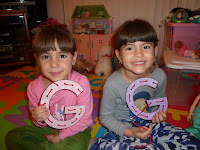

Do you have any other tactile items or learning ideas that I missed? Please share your ideas by commenting below.

Hope you enjoy our list! Be sure to let me know if you use any of these ideas - I'd love to hear how it went for you.

Bern

ABC Fun: W is for Whale Spouting Water - Hands-on Learning & Crafts

It's been awhile since I've blogged one of our ABC Crafts
(summer has been so busy)
but this one was too cute not to share with you!
The Lil Divas really got a kick out of how it turned out.

First, we spent some time on the letter Ww.

Hands-on Letter Play:
I had the Little Divas construct the letter out of our: 

Wikki Stix Alphabet Fun Cards


our foam shapes from the fun intercative book:

How to Build an A


Note: The girls have loved working from this book since we bought it in December-
if you have a toddler and/or preschooler I highly recommend it!


and even some craft sticks at the Oldest Diva's insistance


Letter Recognition Fun:
We use these super & simple letter finding sheets from BeginningReading.com.
The Lil Divas find the target letter (W&w)
and stamp them with our Do-A-Dot Rainbow Markers


Handwriting Practice:
Then, the Lil Divas worked on writing the letters W and w.

I had them finger write the letters W & w in water -
actually it was blue paint in a ziploc bag but they seriously LOVED this activity
and I did not get pictures :( my camera battery was dead!

We also used this simple handwriting sheet from First-School
to practice writing the letters. It coordinated with our theme perfectly.


Phonics Fun:
The Lil Divas sorted picture cards into Ww and Not Ww.
I found them on SuperTeacherWorksheets.com.


The Craft: W is for Whale Spouting Water
This was a hybrid of our Ocean & Water Themed Fun the past few weeks.


What You Need:
white and blue cardstock or heavyweight construction paper
blue tissue paper strips
gray paint (we mixed black & white)
wiggly eyes
glue

What We Did:
I used a block W template I had -
 I've had it forever so the original source is long forgotten but these are easily found online

Then I made a whale head & tale to fit the letter.
This is also easily done
(mine is far from perfect but if you need the template just ask & I will gladly share it)

The Lil Divas painted the W and the whale parts using gray paint & sponges


After allowing ample drying time -
cute out all pieces and glue to form a whale.

Note: ours painted papers did roll up a bit so
I put them between some heavy books and they were good as new


I let the Lil Divas decide where they wanted to put the head & tale pieces.


For the souting water I used blue tissue paper and we cut a few strips and glued it under the head so it looks like water was shooting out from the top of the spout. Cute!


Book:


Hope you enjoyed our Letter W craft!
Bern

Water Theme - Preschool Physics: Exploring Sink vs. Float

Will an object sink or float? 

It's a fairly common science experiment that helps teach children about weight 
and it was a perfect addition to our water themed fun this week.

What You Need:
plastic see through container that can hold water
objects of varying weights
optional: (this is best for older preschoolers): 
a sheet of paper to keep track of findings
I folded a paper in half and wrote sink in one column and float in the other.


What We Did:

1. I filled a see through plastic container with water

2. We gathered household objects and toys of varying weights


3. I let the Lil Divas take turns picking an item to put into the water.

4. Each had the opportunity to hold the item and predict if it would sink or float.

5. I wrote their predictions on the chart and then 
I let them place it into the water to test their predictions


They were so excited when they were correct!


The one that interested them (& stumped them) the most
was our small Dora & Diego figurines!


They felt like they were relatively the same weight.
Yet, Dora floated along the top & Diego sunk!


The Lil Divas were so curious. 
They kept taking them out & putting them back into the water over and over again. 
It was so cute to see them trying to resolve it.


Books:


Have you done any fun experiments using water with your preschooler?

Bern